

What Is Laser Vision Correction?
Laser vision correction is a medical procedure that reshapes the surface of the cornea using laser technology. This allows light to focus correctly on the retina, resulting in clearer vision and improved visual quality.
This procedure is commonly used to treat several refractive errors, including:
- Nearsightedness (Myopia).
- Farsightedness (Hyperopia).
- Astigmatism.
After a successful procedure, most patients are able to carry out their daily activities without the need to wear prescription glasses or contact lenses.

How Does Laser Vision Correction Work?
Laser vision correction relies on advanced laser technology to precisely reshape the cornea. Once the cornea is properly reshaped to match the eye’s natural anatomy, light is focused accurately onto the retina, resulting in significantly improved vision.
The procedure typically takes between 10 and 20 minutes for both eyes, while the laser itself is used for only a few seconds.
Who Is a Good Candidate for Laser Vision Correction?
A person is generally considered a suitable candidate if they meet the following criteria:
- They are at least 18 years old.
- Their vision prescription has remained stable for at least one year.
- They have healthy corneas with no severe thinning.
- They do not have eye diseases that could affect the success of the procedure.
- They are not pregnant or breastfeeding at the time of surgery.
For this reason, every patient undergoes a comprehensive eye examination before the procedure to determine whether laser vision correction is the most appropriate treatment.
Conditions Treated with Laser Vision Correction
Laser vision correction is an effective treatment for several refractive errors, including:
1. Nearsightedness (Myopia)
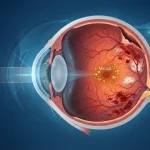
Myopia occurs when light focuses in front of the retina, allowing nearby objects to appear clear while distant objects appear blurry.
2. Farsightedness (Hyperopia)
Hyperopia occurs when light focuses behind the retina, making it difficult to see nearby objects clearly.
3. Astigmatism
Astigmatism is caused by an irregularly shaped cornea, resulting in blurred or distorted vision at both near and far distances.
Types of Laser Vision Correction Procedures
Several advanced laser techniques are available, and the ophthalmologist will recommend the most suitable option based on the patient’s eye condition.
LASIK
LASIK is the most commonly performed laser vision correction procedure. It involves creating a thin corneal flap before reshaping the underlying corneal tissue with a laser.
Benefits include:
- Fast visual recovery.
- Minimal discomfort.
- Quick healing.
- Return to work within a few days.
-
Femto LASIK
Femto LASIK uses a femtosecond laser instead of traditional surgical instruments to create the corneal flap.
Benefits include:
- Greater precision.
- Enhanced safety.
- Reduced risk of complications.
- Excellent visual outcomes.
SMILE (Small Incision Lenticule Extraction)
SMILE is one of the latest laser vision correction techniques. It reshapes the cornea through a very small incision without creating a large corneal flap.
Advantages include:
- Reduced risk of dry eyes.
- Faster recovery.
- Better preservation of corneal strength.
- Suitable for selected cases of myopia.
PRK (Photorefractive Keratectomy)
PRK is recommended for certain patients who are not suitable candidates for LASIK, particularly those with thin corneas.
Although recovery takes longer than LASIK, PRK provides excellent long-term visual results.
Steps of the Laser Vision Correction Procedure
The procedure consists of several stages:
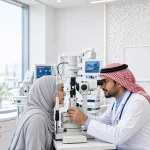
First: Comprehensive Eye Examination
The evaluation includes:
- Vision assessment.
- Corneal thickness measurement.
- Corneal imaging and mapping.
- Intraocular pressure measurement.
- Retinal examination.
Second: Anesthesia
Only anesthetic eye drops are used, and general anesthesia is not required.
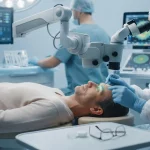
Third: The Procedure
The laser is used to reshape the cornea within just a few minutes.
Fourth: Follow-Up Care
Patients return home on the same day and are instructed to use prescribed eye drops exactly as directed by their ophthalmologist.
Benefits of Laser Vision Correction
Laser vision correction offers numerous advantages, including:
- Freedom from prescription glasses.
- Elimination of the need for contact lenses.
- Improved quality of life.
- Highly accurate results.
- A quick and efficient procedure.
- Return to normal daily activities within a short period.
- High success rates.
- Minimal discomfort.
- Safe and advanced technology.
-
Is Laser Vision Correction Safe?
Laser vision correction is considered one of the safest ophthalmic procedures when performed by an experienced eye surgeon after a thorough pre-operative evaluation.
Advances in laser technology have significantly increased success rates while reducing the risk of complications to a minimum.
Success Rate of Laser Vision Correction
The success rate exceeds 95% for patients who meet the eligibility criteria, with most achieving excellent visual outcomes.
Final results may vary depending on:
- The degree of refractive error.
- Corneal thickness.
- The laser technique used.
- The patient’s adherence to post-operative instructions.
Is the Procedure Painful?
Patients do not experience pain during the procedure because anesthetic eye drops are used.
After the procedure, it is normal to experience mild burning, irritation, or the sensation of a foreign body in the eye during the first few hours. These symptoms gradually improve.
How Long Is the Recovery Period?
Recovery time varies depending on the type of laser procedure performed. In most cases:
- Vision improves within 24 to 48 hours.
- Most patients can return to work within two to three days.
- Vision stabilizes completely within several weeks.
Post-Operative Instructions After Laser Vision Correction
To achieve the best possible results, ophthalmologists recommend the following:
- Use prescribed eye drops exactly as instructed.
- Avoid rubbing your eyes.
- Wear sunglasses when outdoors.
- Avoid swimming for the period recommended by your doctor.
- Refrain from using eye makeup during the first few days after surgery.
- Attend all scheduled follow-up appointments.

Can Vision Problems Return After Laser Vision Correction?
In most cases, the results of laser vision correction remain stable for many years. However, some patients may experience minor changes in their vision over time due to the natural aging process or age-related changes in the eyes, such as the need for reading glasses after the age of 40. This is a normal condition and is not considered a failure of the procedure.
When Will the Results of Laser Vision Correction Be Noticeable?
Most patients notice a significant improvement in their vision within the first few hours after the procedure. Visual quality continues to improve gradually and typically stabilizes completely over the following weeks.
Why choose the Laser care center for laser vision correction?
Laser care center are dedicated to providing integrated ophthalmology and eye surgery services, with a strong focus on patient safety and achieving the best outcomes.
Our key advantages include:
- A team of highly experienced ophthalmologists.
- The latest internationally approved laser technologies.
- Comprehensive pre-operative eye examinations.
- Thorough evaluations to determine the most suitable treatment technique for each patient.
- Continuous post-operative follow-up care.
- A modern medical environment equipped to the highest standards.
- Personalized care for every patient to ensure a comfortable and safe treatment experience.
Tips Before Undergoing Laser Vision Correction
Before deciding to undergo laser vision correction, it is important to:
- Have a comprehensive eye examination.
- Inform your ophthalmologist about any chronic medical conditions or medications you are taking.
- Stop wearing contact lenses for the period recommended by your doctor before the examination.
- Ask any questions you may have to fully understand the procedure and the expected results.
Frequently Asked Questions About Laser Vision Correction
Is laser vision correction suitable for everyone?
No. Some individuals may not be suitable candidates, such as those with certain corneal diseases or unstable vision prescriptions. Your ophthalmologist will determine your eligibility after a comprehensive eye examination.
Can both eyes be treated on the same day?
Yes. In most cases, laser vision correction is performed on both eyes during the same session.
Is hospitalization required?
No. Laser vision correction is an outpatient procedure, allowing patients to return home shortly after the treatment.
Can I exercise after the procedure?
You can gradually resume physical activities according to your ophthalmologist’s instructions. However, strenuous sports and activities should be avoided during the initial recovery period.
Are the results permanent?
The results are generally stable and long-lasting for most patients, although natural age-related changes in vision may occur over time.
Conclusion
Laser vision correction is an important step toward clearer vision and a more comfortable lifestyle. Thanks to continuous advancements in laser technology, the procedure has become more precise, safer, and associated with faster recovery than ever before. The key to achieving the best outcome begins with choosing the right medical center and undergoing a comprehensive evaluation to determine the most appropriate treatment for your individual needs.
At Nim Medical Center, we are dedicated to providing comprehensive eye care using the latest medical technologies, with meticulous evaluation before the procedure and continuous follow-up afterward to ensure the best possible results. If you are ready to free yourself from glasses or contact lenses, booking an appointment with one of our ophthalmologists is the first step toward evaluating your vision and choosing the most suitable treatment option.